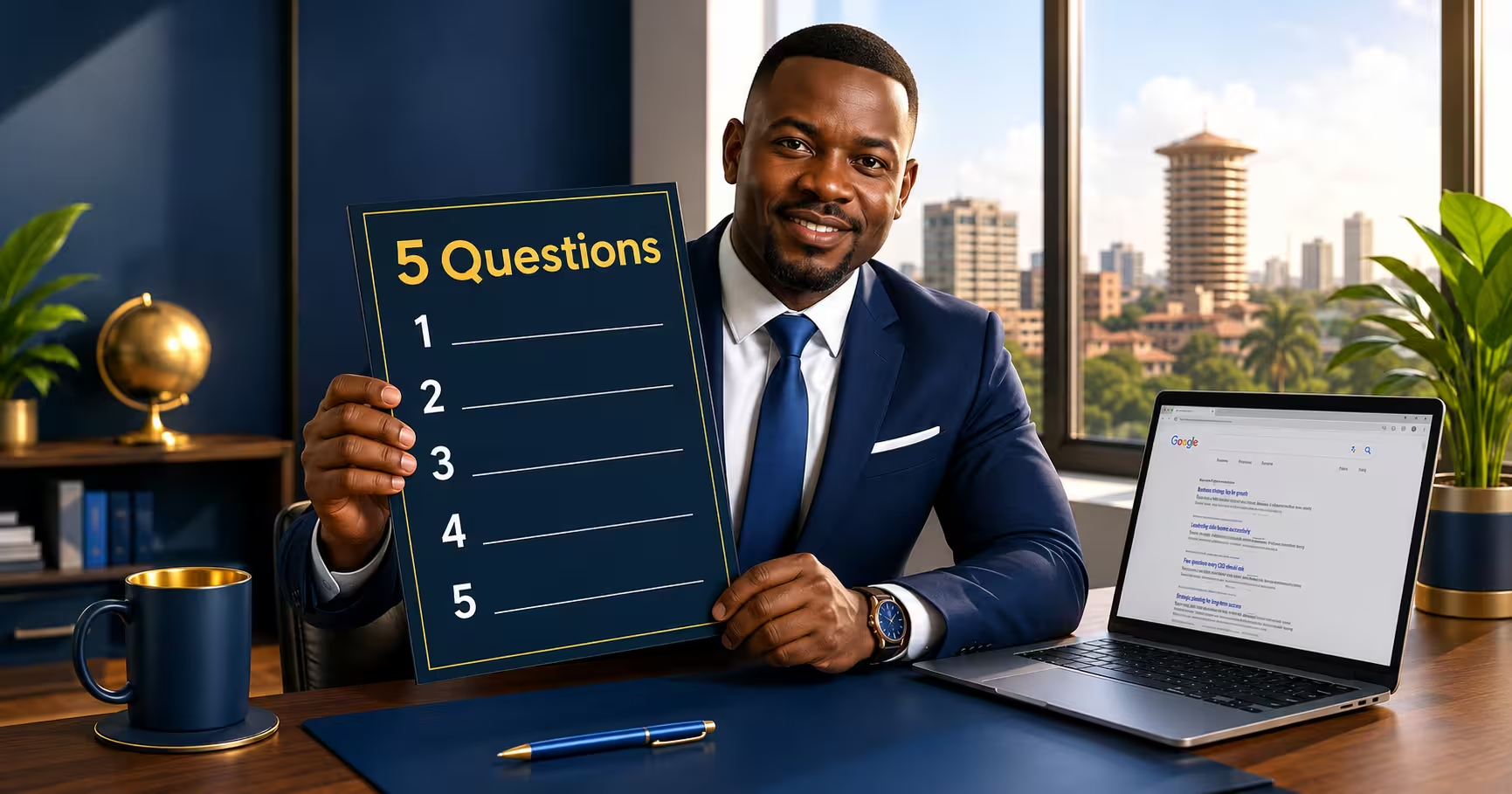
Why Most Websites in Uganda Don't Rank on Google
The short answer: Most websites in Uganda don’t rank on Google because Google hasn’t been told they exist, they target keywords nobody searches for, or they have technical problems blocking search engines from reading them. In most cases, all three are true at the same time and all three are fixable.
1. Google Does Not Know Your Website Exists
This is the most common problem. And most business owners have no idea.
When you build a website, Google does not automatically find it. Google has to crawl it and send a bot to read your pages and add them to its search index.
If your site was never submitted to Google, it may not be indexed at all.
Check right now: open Google and type site:yourwebsite.com. If nothing appears, Google has not indexed your site.
The fix: create a free Google Search Console account, add your website, and submit your sitemap. Google’s own documentation walks you through it step by step. It takes less than 20 minutes.
Without this step, nothing else matters.
2. You Are Targeting Keywords Nobody Searches For
Most businesses write their website content the way they think about their business.
Not the way their customers think about their problem.
A solar company in Kampala might describe their product as “photovoltaic energy solutions.” Their customers type “solar panels Uganda.”
A lawyer might write “legal advisory services.” Their clients search “lawyer in Kampala.”
This mismatch means Google ranks your page for terms nobody searches — and ignores it for terms that matter.
Keyword research is the process of finding the exact phrases your buyers type into Google. According to Ahrefs’ organic CTR study, the #1 result on Google gets 27.6% of all clicks. Position 2 gets 15.8%. By position 10, you are receiving less than 3%.
If you are not targeting the right keyword, you are not in the game.
3. Your Website Has Hidden Technical Problems
A website can look perfect to the human eye and be completely broken for Google.
Google’s crawlers read your site like a document. If the structure is wrong, they cannot understand what your pages are about, and they will not rank them.
Common technical problems that block rankings:
- Slow loading speed: If your site takes more than 3 seconds to load, Google penalises you. According to Google’s Core Web Vitals research, pages that load slowly see significantly higher bounce rates. Check yours free at PageSpeed Insights.
- Not mobile-friendly: More than 60% of Google searches in Uganda happen on a phone. A site that breaks on mobile will not rank.
- Broken links: Links that go nowhere tell Google your site is poorly maintained.
- Missing title tags and meta descriptions: Google uses these to understand what each page is about. Missing them is like filing a report with no title.
- Duplicate content: If multiple pages say the same thing, Google does not know which one to rank and may rank neither.
When we ran a full technical audit on Easy Power Company’s website using Screaming Frog, we found over 20 issues; they had never seen all of them silently blocking their rankings. See what happened when we fixed them.
4. Your Content Does Not Match What People Are Actually Looking For
Google’s job is to match a search query to the best possible answer.
If someone searches “how to get solar panels installed in Kampala” and your page only shows a price list, Google will rank a competitor whose page actually answers the question.
This is called search intent matching your content to what the searcher is trying to do.
According to Backlinko’s research on search intent, there are four types every business needs to understand:
- Informational: “how does solar energy work in Uganda?”
- Navigational: “Best solar batteries in Uganda”
- Commercial: “best solar company Kampala”
- Transactional: “buy solar panels Uganda”
Each type needs a different kind of page. Mixing them up or ignoring intent entirely means you rank for nothing.
5. Your Competitors Have More Authority Than You
Even if you fix everything above, there is one more factor: trust.
Google measures trust through backlinks links from other websites pointing to yours. Every link is a vote of confidence. More quality links means more authority means higher rankings.
A competitor who has been online for five years, with links from news sites, directories, and partner pages, will outrank a newer site with better content at least initially.
This is why SEO is not a one-time fix. It is a process of building credibility over time.
The good news: in Uganda, most competitors are not doing this at all. The bar is low. Starting now gives you a real advantage.
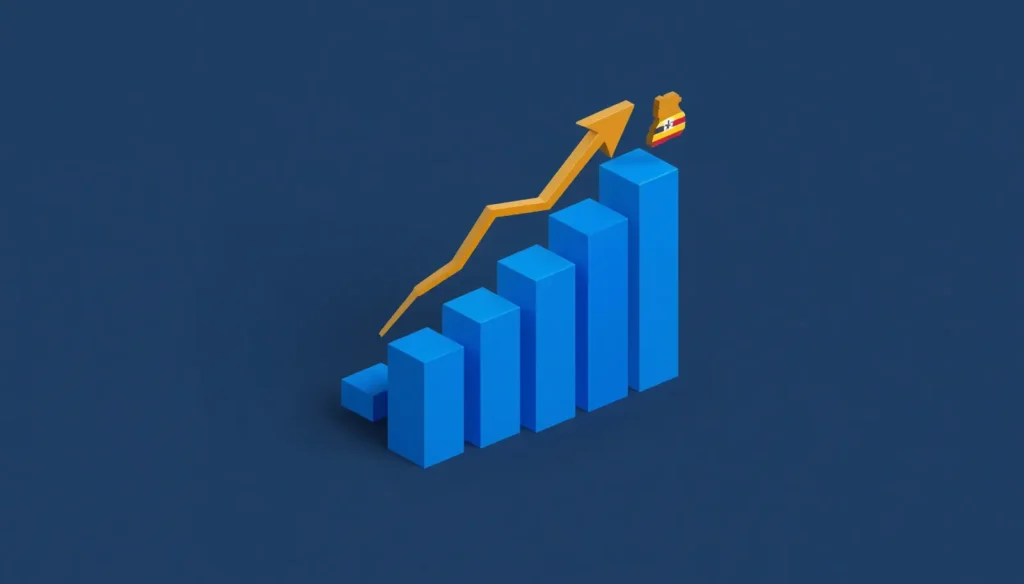
What Real SEO Actually Did for a Ugandan Business
Easy Power Company sells solar panels and security systems in Uganda.
Before working with us, their website was pulling around 500 weekly visitors. For every commercial keyword that mattered the searches that bring real buyers they were invisible on Google.
We ran a full technical audit. Fixed every hidden problem. Built a keyword strategy around what their customers were actually typing into Google.
Then something changed.
Within 30 days, weekly traffic jumped to over 1,200 visitors. They hit top 3 on Google for “Residential Solar Panels Uganda.” Page 1 for electric fencing, home security systems, and six other commercial terms.
The result: over 300 million UGX in attributable revenue from organic search alone.
Today, search “top solar companies Uganda” on Google. Easy Power appears first not as a paid ad, but in Google’s AI Overview. Above Village Energy. Above ENGIE Energy Access. Two international companies. One local business. First place.
That is what fixing these five problems actually delivers.

How to Fix It: A 5-Step Plan
Fix your website’s Google ranking by addressing each of these five areas in order. Most businesses can complete steps 1–3 in a single afternoon.
- Check if Google has indexed your site
Search site:yourwebsite.com in Google. If nothing appears, your site is not indexed. Submit your sitemap immediately via Google Search Console it is free and takes 20 minutes to set up. - Research the keywords your buyers actually use
Use Google Keyword Planner (free) or Ahrefs to find what your customers type. Target one primary keyword per page. Stop guessing; use the data. - Run a technical audit on your site
Check your speed at PageSpeed Insights. Use Screaming Frog’s free version to find broken links, missing title tags, and duplicate content. Fix everything it flags. - Rewrite your content to match search intent
For every key page, ask: what is the reader trying to DO when they search this? Answer that question directly in the first paragraph. If a page answers “what” but the searcher wants “how”, rewrite it. - Build your authority consistently
Get listed in local business directories. Ask suppliers and partners to link to your website. Publish useful content that other sites want to reference. This takes time, but unlike paid ads, it keeps working after you stop paying.
Most websites in Uganda that follow these five steps see measurable ranking improvements within 60–90 days.
Frequently Asked Questions
How long does it take to rank on Google in Uganda?
Most websites see measurable ranking improvements within 60–90 days when technical issues are fixed first. Significant organic traffic growth – the kind that generates real leads, typically takes 3–6 months of consistent work. SEO results take longer than paid ads, but they last far longer and do not stop when you stop paying.
Does Google work properly in Uganda?
Yes. Google operates fully in Uganda and indexes Ugandan websites using the same ranking factors it applies globally. The difference is that most Ugandan businesses have not optimised for those factors, which creates a significant opportunity for those who do.
How much does SEO cost in Uganda?
Professional SEO retainers in Uganda range from roughly UGX 600,000 to UGX 4,000,000 per month (~$160–$1,100), depending on your industry and the competitiveness of your keywords. A one-time technical audit starts from around $150. Before hiring anyone, read our guide on how to choose an SEO agency in Uganda.
Can I do SEO myself?
Yes, for the basics. Setting up Google Search Console, submitting your sitemap, and fixing technical errors on your site are all things a motivated business owner can do alone. The harder parts – keyword strategy, content creation, and building authority – take significant time to learn and consistently execute. Most business owners find their time is better spent running their business.
Why does my competitor rank higher even though my website looks better?
Design and rankings are separate. A visually impressive website with the wrong keywords, slow loading speed, and no backlinks will lose to a plain website that is technically sound and targets the right search terms. Google cannot see how your site looks; it can only read your code, content, and links.
Still not sure why your website is not ranking?
Get a free website review. I will look at your site and tell you exactly what is blocking it from Google with no obligation to work together.